Importing Smart Home Devices to South Africa

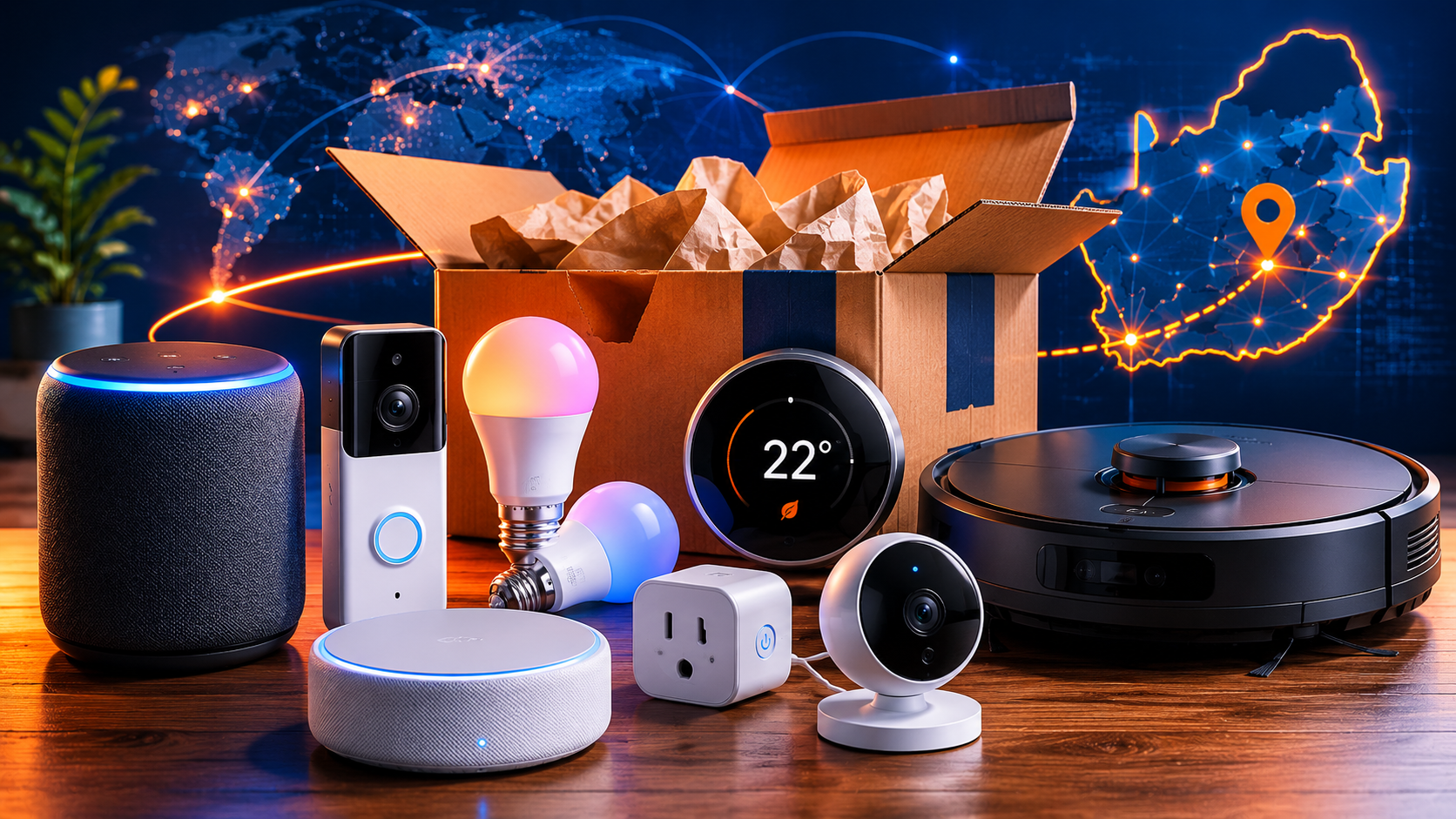
Smart home devices let you control lights, locks, speakers, cameras, and appliances with your voice or a single app. South Africa has a growing local selection, but if you want the full range of products available in the US, UK, or Europe (at international pricing), importing is the way to get there. SSS handles the entire process: purchase, international shipping, customs clearance, duties, and delivery to your door, quoted as one all-inclusive price.
In This Guide
- What Counts as a Smart Home Device?
- Why Import Smart Home Devices to South Africa?
- Popular Smart Home Categories Worth Importing
- What Does It Cost to Import Smart Home Devices?
- How Does SSS Handle a Smart Home Import?
- Will Imported Devices Work in South Africa?
- Where to Buy Smart Home Devices for Import
- Frequently Asked Questions
What Counts as a Smart Home Device?
A smart home device is any household product that connects to Wi-Fi or a local hub and can be controlled remotely through an app, voice command, or automation routine. The category covers everything from a R500 smart plug to a R15,000 robot vacuum.
The common thread is connectivity. These devices talk to each other (and to you) through ecosystems like Amazon Alexa, Google Home, Apple HomeKit, or Samsung SmartThings. Most people start with a voice assistant or smart speaker, then expand from there. Smart home gear falls under the broader electronics importing category, and the customs process works the same way.
Why Import Smart Home Devices to South Africa?
Several major smart home brands now have some presence in South Africa through local retailers. Google Nest speakers, Amazon Echo devices, and a handful of smart plugs and cameras are available from stores like Yuppiechef, Takealot, and specialist retailers.
So why import?
Limited local selection
South African retailers carry a fraction of what’s available internationally. If you want a specific Ring doorbell model, a Lutron lighting system, an Ecobee thermostat, or a US-market Sonos bundle, your options locally are thin or non-existent.
Pricing differences
SA retail markup on imported electronics can be significant. Depending on the product, buying at US pricing and paying import duties can still work out cheaper than the local shelf price, especially when you’re buying multiple devices in a single shipment. For a sense of how international online shopping costs compare to local retail, our comparison guide breaks down the numbers.
New releases and US-exclusive products
Product launches reach the US market months (sometimes years) before South Africa, if they arrive here at all. Brands like Wyze, Aqara, TP-Link Kasa, and many Zigbee-based smart home accessories have no official SA distribution.
Popular Smart Home Categories Worth Importing
Voice assistants and smart speakers
Amazon Echo, Google Nest, and Apple HomePod are the three main ecosystems. These act as the central hub for most smart home setups, letting you control other devices by voice. The full Echo range (Echo Show, Echo Studio, Echo Pop) is rarely stocked locally in all variants.
Smart security
Video doorbells (Ring, Google Nest Doorbell), indoor and outdoor cameras (Arlo, Wyze, Blink), and smart locks (August, Yale) are among the most commonly imported smart home products. The US market has far more options and competitive pricing in this category.
Lighting
Philips Hue is available in SA, but the full range of bulbs, light strips, and accessories is not. Other lighting systems like Lutron Caseta and LIFX are import-only for most South African buyers.
Smart displays and streaming
Amazon Echo Show, Google Nest Hub, and Meta Portal devices combine a screen with a voice assistant. These are useful as kitchen displays, video calling stations, and smart home control panels. Local availability is inconsistent.
Robot vacuums and home automation
Brands like iRobot Roomba, Roborock, and Ecovacs have limited SA distribution. The US range is broader and often priced 20-40% lower. Smart plugs, smart switches, and sensors from brands like TP-Link, Meross, and Aqara fall into the same import-friendly category.
What Does It Cost to Import Smart Home Devices?
The total landed cost of an imported smart home device depends on four things: the purchase price, international shipping, customs duty, and VAT.
Customs duty on electronics
South Africa applies ad valorem customs duty based on the CIF value (cost + insurance + freight). Many IT and electronic products attract 0% customs duty under South Africa’s tariff schedule, though some finished consumer electronics can be rated up to 25%. The exact rate depends on the product’s HS tariff code. For a detailed explanation of how customs values are calculated, see our post on how customs value is determined.
VAT
15% VAT is charged on the CIF value plus any customs duty. This applies to all imports regardless of the duty rate.
How SSS quotes it
SSS provides a single all-inclusive price that covers the product cost, international shipping, customs clearance, duties, VAT, and delivery to your address in South Africa. No hidden fees, no surprises at the border. The price you’re quoted is the price you pay. To understand the common cost traps that catch first-time importers, see our guide on importing mistakes and hidden costs.
How Does SSS Handle a Smart Home Import?
SSS is an end-to-end import service. That means you don’t buy the product yourself and then ask us to ship it. We handle the full chain:
- You tell us what you want. Send us the product link, or just describe what you’re after. We’ll confirm availability and pricing.
- We quote. One price, all-inclusive: product, shipping, customs, duties, VAT, delivery.
- We purchase and ship. Once you accept the quote, we buy the product from the international retailer and arrange shipping to South Africa.
- We clear customs. All customs documentation, duty payments, and SARS compliance is handled by our team.
- We deliver. Your smart home device arrives at your door. No border pickups, no paperwork on your end.
The process works the same for a single Echo Dot or a full-house smart home kit with 30 devices. For a detailed walkthrough, see our step-by-step import guide.
Will Imported Devices Work in South Africa?
This is the question that comes up most often, and the honest answer is: almost always, with a couple of things to check first.
Wi-Fi and connectivity
Smart home devices use standard Wi-Fi (2.4GHz or 5GHz), Bluetooth, Zigbee, or Z-Wave. These protocols work the same worldwide. An Amazon Echo bought in the US will connect to your South African Wi-Fi network without issues.
Power supply
South Africa uses 230V electricity. The US uses 110V. Most smart home devices (speakers, cameras, hubs) ship with a USB or barrel-jack power adapter. You’ll need a plug adapter for the wall socket, or in some cases a replacement power supply. Devices with built-in plugs (like US-format smart plugs) will need an adapter or may not be practical for SA sockets. SSS can advise on compatibility before you buy.
Voice assistant regions
Amazon Alexa and Google Assistant both work in South Africa, though some features (like local shopping or certain third-party skills) may be limited compared to the US. Apple HomeKit and Siri work without regional restrictions for device control.
Where to Buy Smart Home Devices for Import
You don’t need to find the retailer yourself (SSS handles purchasing), but if you want to browse and send us links, these are the main sources:
- Amazon.com has the widest smart home selection globally, including Amazon-branded devices (Echo, Ring, Blink) and third-party products.
- Best Buy carries a broad range of smart home brands and often runs competitive sales.
- Google Store is the source for Nest speakers, Nest cameras, and Nest thermostats.
- Apple Store for HomePod and HomeKit-certified accessories.
- eBay can be useful for discontinued models or bulk purchases.
Most of these retailers are US-based. Our USA import guide covers the logistics of buying from American stores. Send us the product page URL when you request a quote, and we’ll take it from there.
Frequently Asked Questions
Can I import smart home devices to South Africa legally?
Yes. There are no import restrictions on standard smart home electronics in South Africa. All duties and VAT are handled through normal SARS customs processes, which SSS manages on your behalf.
How long does it take to import a smart home device?
Typical turnaround is 10 to 21 working days from order to delivery, depending on the origin country and product availability. SSS provides estimated timelines with every quote.
Is it worth importing if I can buy locally?
It depends on the product. If the exact model you want is available locally at a fair price, buying in SA is simpler. Importing makes sense when you want a product not sold here, need a specific variant, or the local markup makes the all-inclusive import price competitive. Use the Quick Estimate tool to compare.
Can I import multiple devices in one shipment?
Yes, and it’s often the most cost-effective approach. Combining several smart home devices into a single shipment reduces per-item shipping costs. SSS handles consolidated shipments regularly.
What if my imported device is faulty?
SSS sources from authorised retailers with standard manufacturer warranties. If a device arrives faulty, we assist with the returns or warranty process. The specifics depend on the retailer and manufacturer’s policy.
Planning your next import? Use our online calculator for a quick estimate, or get in touch for advice on your shipment.