Prohibited and Restricted Imports in South Africa: What You Can and Can’t Bring In
South Africa sorts controlled goods into two groups. Prohibited items may never be imported. Restricted items are allowed only if you hold the correct permit or authority before the goods arrive. Import the wrong thing, or the right thing without the right paperwork, and SARS can detain, seize, or destroy the shipment, with no refund from the seller. This guide explains the difference, lists the categories that catch people out, and shows how to check before you buy.
In this guide
The quick version
Most everyday online purchases (electronics, clothing, hobby gear, homeware) import without special permits, though duty and VAT still apply. The items that need extra care fall into a smaller set: anything regulated for safety, health, security, or trade-protection reasons. If your order touches medicines, food, plants, animal products, firearms, radio or telecoms equipment, or used goods, assume a permit or approval is required and confirm it before you pay. For how those costs are calculated once an item is cleared to enter, see our guide to how customs value is determined.
Prohibited vs restricted: the difference
The two terms are often used interchangeably, but they are not the same thing.
- Prohibited goods cannot be imported under any circumstances. There is no permit that makes them legal.
- Restricted goods can be imported, but only with the correct permit, licence, or letter of authority issued by the relevant South African authority before the shipment arrives.
Several different bodies control imports, not just SARS. SARS handles customs clearance, but the permit itself usually comes from another regulator: ITAC for import permits and used goods, the NRCS for regulated products, ICASA for radio and telecoms equipment, SAHPRA for medicines and health products, and the Department of Agriculture for food, plants, and animal products. Knowing which body governs your item is half the battle.
Goods commonly prohibited
The following are generally not allowed into South Africa at all:
- Narcotics and illegal drugs
- Counterfeit and trademark-infringing goods (fake branded clothing, shoes, electronics, and accessories)
- Certain weapons, including some knife types and prohibited firearm categories
- Hazardous and toxic waste
- Used and retreaded pneumatic tyres
- Pornographic or obscene material as defined under South African law
This is not an exhaustive list, and definitions matter. A folding knife may be fine while a specific concealed or automatic type is not. When a category is borderline, treat it as prohibited until confirmed otherwise.
Goods that need a permit or authority
These can be imported, but only with the right approval in place first. Our FAQ lists the restricted and prohibited categories we see most often.
Firearms and ammunition
Importing firearms requires a permit and the appropriate competency and licensing through the South African Police Service. This is a slow, document-heavy process and not something to start after the goods have shipped.
Medicines, supplements, and health products
Medicines and many supplements fall under SAHPRA. Some require registration or a specific authorisation to bring in, even for personal use. Vitamins and common supplements sit in a grey area and are frequently held at customs.
Food, plants, and animal products
Foodstuffs, seeds, plants, and anything of animal origin are controlled by the Department of Agriculture and may need import permits and health certificates. Many are refused outright on biosecurity grounds.
Radio, wireless, and telecoms equipment
Devices that transmit (two-way radios, signal boosters, some drones, and certain smart-home gear) need ICASA type approval. Read more in our guide to importing smart home devices.
Regulated electrical and consumer products
Many electrical goods, appliances, and certain consumer products require an NRCS Letter of Authority to confirm they meet compulsory safety specifications. Our guide to importing electronics to South Africa covers where this applies.
Used and second-hand goods
Used goods, from clothing to machinery to vehicles, generally require an ITAC import permit. Second-hand vehicle imports in particular are tightly controlled.
Grey areas that trip people up
Some of the most common customs hold-ups involve items buyers assume are fine:
- Supplements and protein powders. Routinely stopped pending SAHPRA or health clearance.
- Vapes and e-cigarettes. Increasingly regulated and taxed; rules are tightening.
- Drones. May need both ICASA approval and civil aviation registration depending on the model.
- Replica and “inspired by” branded goods. Treated as counterfeit if they carry protected marks.
- Lithium batteries and powered devices. Not prohibited, but classed as dangerous goods. They need a Material Safety Data Sheet and are subject to carrier rules. See our note on this in the air vs sea freight guide.
These are also among the most common importing mistakes South Africans make.
What happens if you get it wrong
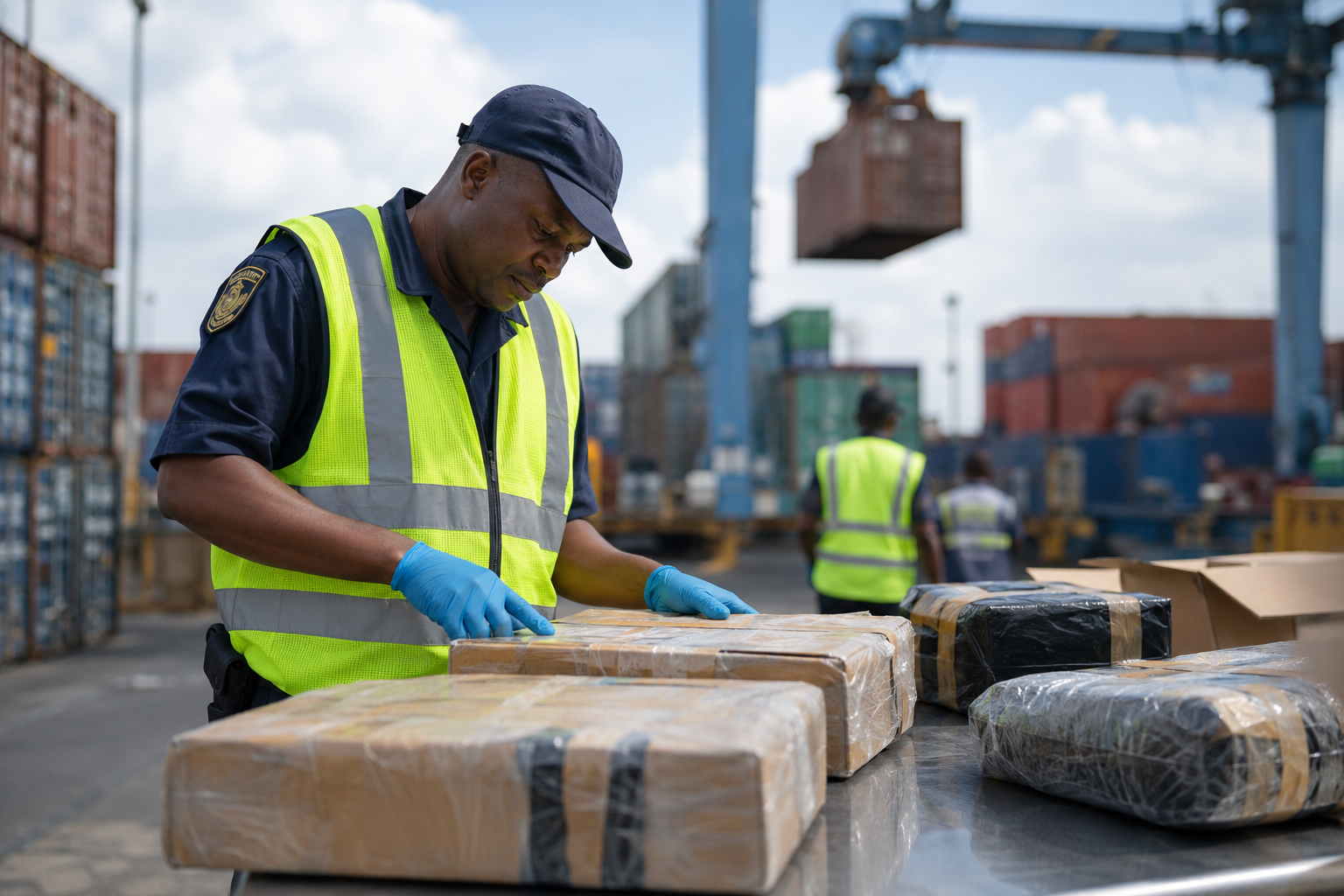
If a restricted item arrives without the required permit, SARS will hold it. Depending on the goods, you may be able to apply for the permit retrospectively (slow, and storage fees accrue while you wait), or the shipment may be seized and destroyed. Prohibited goods are simply confiscated. In all cases the seller is unlikely to refund you, so the loss is yours. Honest declarations and correct permits are far cheaper than the alternative.
How to check before you buy
- Identify the category. Is it electrical, wireless, ingestible, animal or plant based, a weapon, or used? Any “yes” means check further.
- Find the controlling authority. Match the item to the right body (ITAC, NRCS, ICASA, SAHPRA, SAPS, or Agriculture).
- Confirm the permit before paying. Never order first and sort paperwork later.
- Keep your invoice and product details. Customs may ask for them during clearance.
- Ask if you are unsure. Five minutes of checking can save you the cost of the goods.
For the full process from purchase to delivery, see our step-by-step guide to importing goods to South Africa.
How SSS handles restricted goods
Scott’s Shipping Services reviews every order against current import rules before we buy anything. If an item is prohibited, we tell you upfront rather than letting it ship and get seized. If it is restricted, we flag what permit or approval is needed so you can decide how to proceed. Because we manage purchasing, shipping, customs clearance, and delivery as one all-inclusive service, compliance is built into the quote rather than left for you to untangle at the border.
Frequently asked questions
What items are prohibited from import into South Africa?
Narcotics, counterfeit goods, certain weapons, hazardous waste, used tyres, and obscene material are generally prohibited and cannot be imported under any permit. Definitions are specific, so borderline items should be treated as prohibited until confirmed.
What is the difference between prohibited and restricted goods?
Prohibited goods can never be imported. Restricted goods can be imported, but only if you hold the correct permit or authority before the shipment arrives. The permit usually comes from a regulator such as ITAC, NRCS, ICASA, SAHPRA, SAPS, or the Department of Agriculture, not from SARS.
Can I import supplements and vitamins into South Africa?
Sometimes, but they are frequently held at customs pending health clearance through SAHPRA. Some products require authorisation even for personal use. Confirm the specific product before ordering.
Do I need a permit to import electronics?
Standard consumer electronics usually clear without a special permit, though duty and VAT apply. However, products that transmit a signal may need ICASA type approval, and certain regulated electrical goods need an NRCS Letter of Authority.
What happens if my restricted item arrives without a permit?
SARS will hold the shipment. You may be able to apply for the permit afterwards while storage fees accrue, or the goods may be seized and destroyed. The seller will usually not refund you, so the loss falls to you.
Does SSS check whether my item is allowed before buying?
Yes. We review every order against current import restrictions before purchase. If something is prohibited or needs a permit, we tell you before any money is spent on the goods.
Not sure whether your item is allowed? Use our online calculator for a quick estimate, or get in touch and we’ll check it for you before you buy.