Importing Audio Equipment into South Africa

South Africa’s retail options for serious audio gear are limited, and the prices on what is available rarely compete with overseas retailers. Importing amplifiers, speakers, turntables, and headphones is simpler than most people expect, once you know how duties, taxes, and shipping work. Scott’s Shipping Services (SSS) handles the full process: purchase, international shipping, customs clearance, and delivery to your door, quoted as one all-inclusive price with no hidden costs.
In This Guide
Why Import Audio Equipment into South Africa?
If you have ever priced a quality amplifier or pair of bookshelf speakers at a South African retailer, you already know the markup. Many specialist audio brands have no local distribution at all, and those that do often charge a significant premium over their international retail price.
Importing gives you access to the full range of products from global manufacturers. Brands like Schiit, Pro-Ject, Klipsch, and Focal sell direct or through major retailers overseas at substantially lower prices. Even after duties, VAT, and shipping, the total landed cost in South Africa is often less than what local stores charge for comparable equipment.
The vinyl revival has added another reason to look overseas. Turntables, phono preamps, and cartridges are back in production from dozens of manufacturers. South African stock is thin. International stock is not. Audio equipment is one of the most popular categories we import, alongside other electronics and tech gear.
What Audio Gear Can You Import?
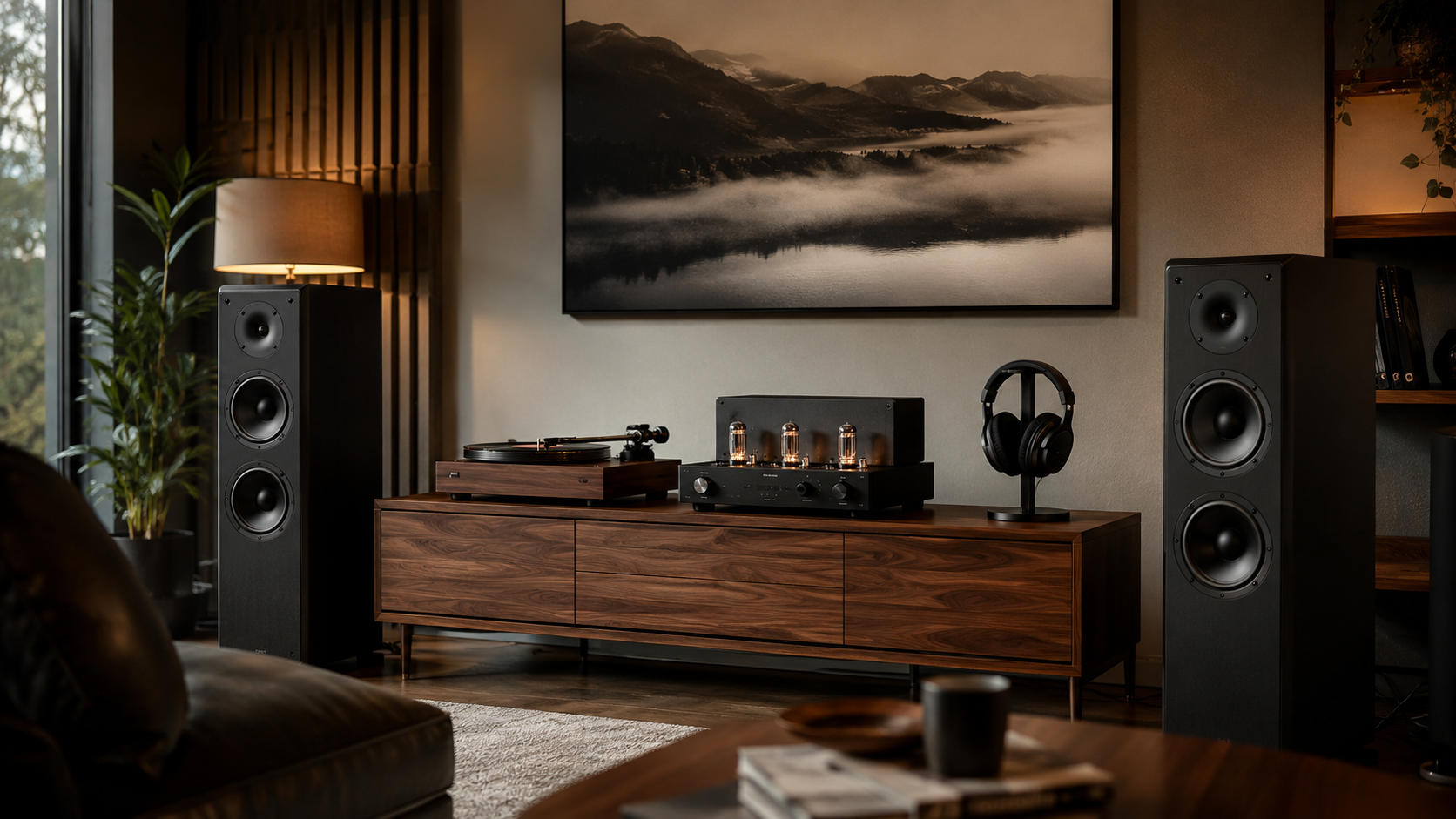
Practically anything that runs on electricity or sits on a shelf. Common imports include:
- Amplifiers and receivers (tube, solid-state, and integrated)
- Bookshelf and floor-standing speakers
- Studio monitors
- Turntables and phono preamps
- Headphones and earphones
- DACs (digital-to-analogue converters)
- Soundbars and subwoofers
- Acoustic treatment panels and soundproofing
- Cables, speaker stands, and accessories
Vinyl records can be imported alongside your equipment. Both are subject to duties and VAT. For a broader view of what people import through SSS, see our guide on what to import.
Where to Buy Audio Equipment Online
For general-purpose shopping, Amazon and eBay carry a wide range of audio products from budget to high-end. Check seller ratings and return policies before committing to a purchase.
For specialist gear, look at dedicated audio retailers. Schiit manufactures its own amplifiers and DACs in the US. TubeDepot stocks valve amplifiers and replacement tubes. Parts Express and Crutchfield are solid options for speakers, drivers, and crossover components. Many of these retailers are US-based, and our USA import guide covers the logistics of buying from American stores.
SSS can purchase from any of these retailers on your behalf. You pick the product, we handle the rest.
What Does It Cost to Import Audio Equipment?
Three components make up the total landed cost of any audio import:
- Product price in the currency of the seller
- International shipping from the seller to South Africa
- South African duties and VAT applied at customs
The exact total depends on the product category, weight, dimensions, and origin country. A pair of headphones from the US will cost significantly less to ship and clear than a 50 kg floor-standing speaker from Germany. For a general breakdown of import costs, see our guide on importing goods to South Africa.
SSS rolls all of these into a single quote. You see one number before you commit. No separate customs invoices, no broker fees arriving weeks later, no currency surprises.
Use the quick estimate calculator to get a ballpark figure for your specific product.
How Customs Duties and VAT Work
SARS (the South African Revenue Service) classifies imported goods using HS codes. Audio equipment falls under several different tariff headings depending on the product type. Speakers, amplifiers, headphones, and turntables each attract different duty rates.
The customs value on which duty is calculated includes the purchase price plus the cost of shipping the goods to South Africa. VAT at 15% is then applied on top of the customs value plus the duty amount. For a detailed explanation of how this calculation works, see our post on how customs value is determined.
This means the duty and VAT portion can add a meaningful percentage to the product price. The exact figure varies by product, which is why SSS provides a specific quote rather than a generic estimate. No guesswork, no assumptions.
How the Import Process Works with SSS
The process is simple and follows the same steps regardless of what you are importing:
- You find the product you want online and send us the details.
- SSS provides a single all-inclusive quote covering the product, shipping, duties, VAT, and delivery.
- Once accepted, SSS purchases the item from the retailer.
- The product ships to our receiving facility and then on to South Africa.
- SSS handles customs clearance with SARS on your behalf.
- Your audio gear is delivered to your door.
You deal with one company from start to finish. No juggling a retailer, a freight forwarder, and a customs broker separately.
For a detailed walkthrough of the process, see our step-by-step import guide. Larger items like floor-standing speakers or heavy amplifiers may be better suited to our freight service.
Check Voltage and Compatibility Before You Buy
A few other things to confirm before placing your order:
- Plug type: South Africa uses Type M (large three-prong) and Type C (two-prong) plugs. You will likely need an adaptor or a new power cable for imported equipment.
- Warranty: Most international manufacturer warranties do not cover South Africa. Factor this into your decision, particularly on high-value items.
- Weight and dimensions: Large speakers and heavy amplifiers cost more to ship. Get a quote before assuming the price will be similar to a pair of headphones.
For more on avoiding costly mistakes when importing, read our guide on common importing mistakes.
Frequently Asked Questions
Do I need a permit to import audio equipment into South Africa?
No. Audio equipment for personal use does not require an import permit. It is classified as standard consumer electronics and is not on any restricted goods list.
Will I pay customs duty on headphones?
Yes. Headphones are subject to customs duty based on their HS code classification. The rate varies depending on the specific product. VAT at 15% applies on top of the duty amount.
Can I import a turntable with vinyl records?
Yes. Both turntables and vinyl records can be imported into South Africa. Each is classified under a separate HS code and attracts its own duty rate. SSS can ship them together in one consignment.
How long does shipping take?
Transit times depend on the origin country and the shipping method selected. Shipments from the US typically take 2 to 4 weeks. SSS provides an estimated delivery window with every quote.
What if my equipment arrives damaged?
SSS insures all shipments. If your audio equipment arrives damaged, contact us immediately with photographs of the damage and packaging. We will handle the claim process on your behalf.
Planning your next import? Use our online calculator for a quick estimate, or get in touch for advice on your shipment.