
Local LLMs for Professional Firms in South Africa: POPIA, Data Control and Audit

For a South African firm handling client money, medical records or legal files, the question with AI is not which model is cleverest. It is where your data goes. A local LLM, one that runs on hardware you own, keeps that data in the building, which is the cleanest answer to POPIA. This guide is for financial, medical and legal practices weighing AI against their compliance obligations.
To be clear on what we do: Scott’s Shipping Services does not sell the software. We import the hardware a local setup runs on, cleared and delivered, so the estimate below is for that import.
In This Guide
The shadow AI already in your office
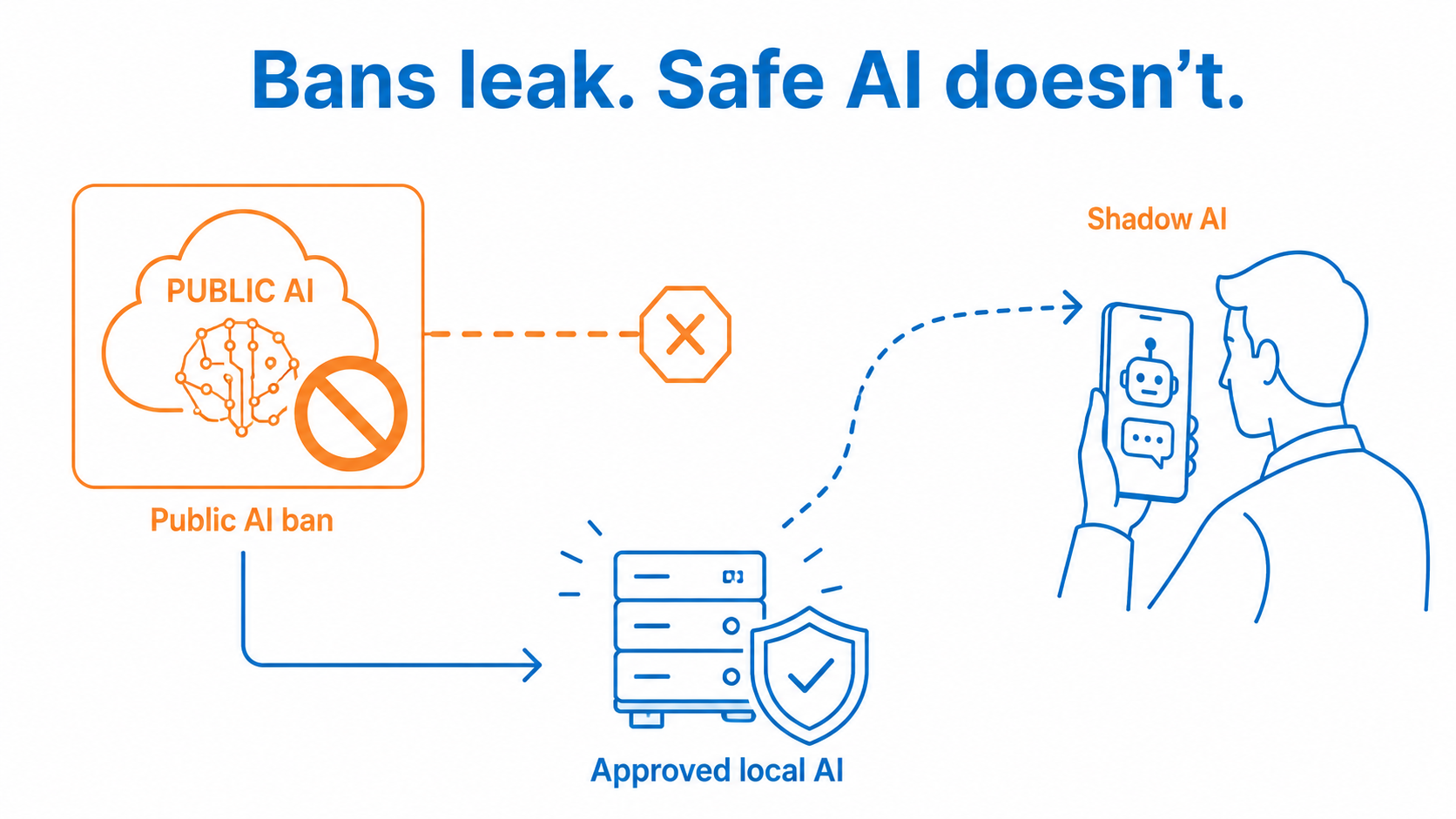
If your staff have deadlines and a phone, some of them are already pasting work into a public AI tool. Often that work contains client information. The common response is to block the public tools on the office network.
Blocks rarely hold. People switch to a personal phone or a home laptop, and the data leaves anyway, now with no oversight at all. A ban tends to push the problem underground rather than solve it. Giving staff a safe, sanctioned AI they are allowed to use is more effective than an unenforceable rule. A local model is that safe option, because the data stays inside your control.
Why cloud privacy promises may fall short of POPIA
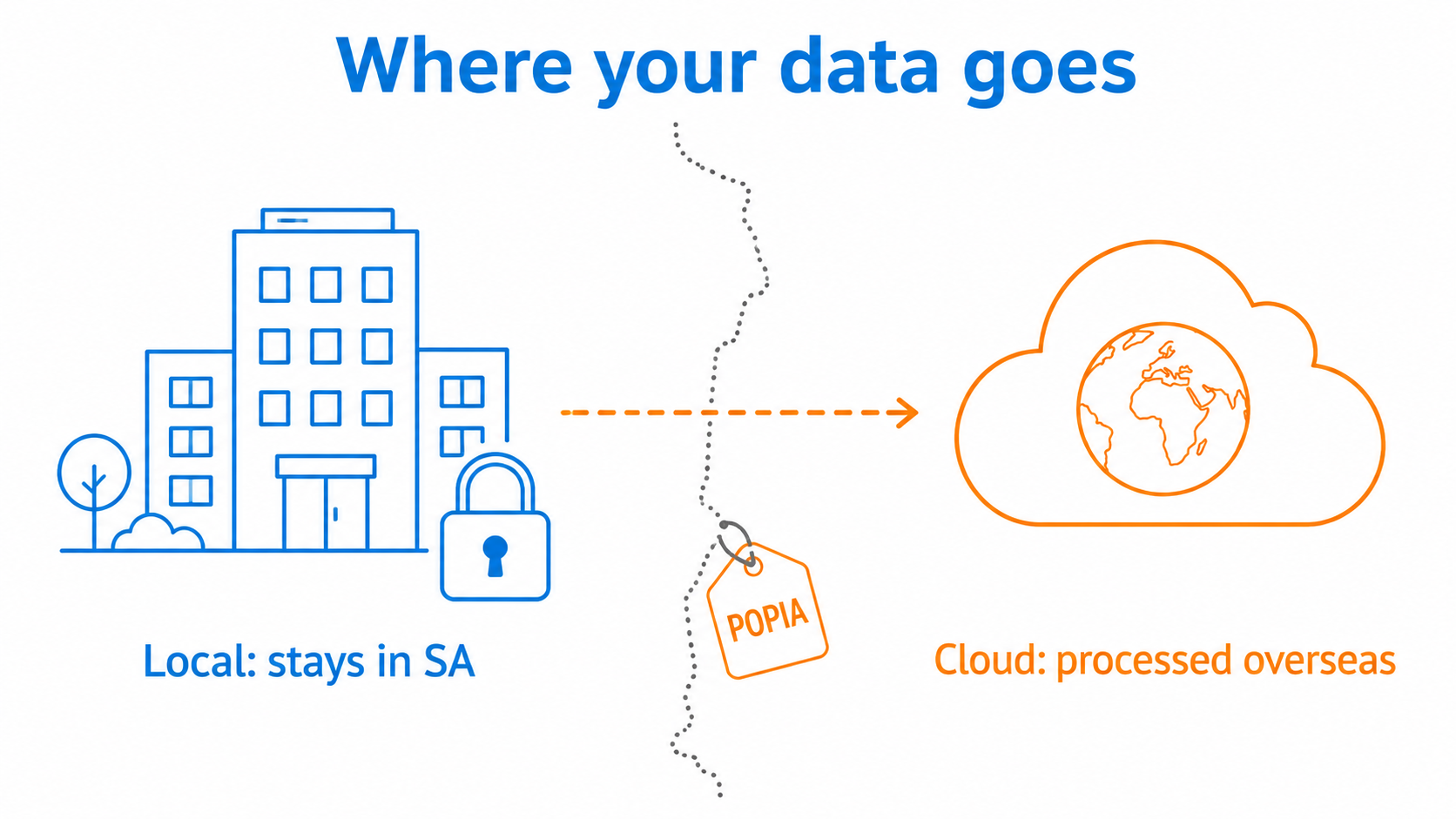
POPIA governs how personal information is processed, including when it is sent across borders. The major AI providers are built around large-scale processing, much of it on overseas infrastructure. A professional or API plan still routes your prompts, and whatever you paste into them, to a processor outside South Africa.
A provider can offer a genuine privacy policy and still not line up neatly with what POPIA asks of you as the responsible party. The strongest data-residency and processing controls are usually reserved for large enterprise agreements, not the plans a typical firm signs up for. Running the model locally sidesteps the cross-border question entirely, because the data never leaves your premises.
This is general information, not legal advice. Where the line sits for your practice is a question for a compliance specialist, but the structural point holds: on-premises is the simplest position to defend.
You can audit a local model
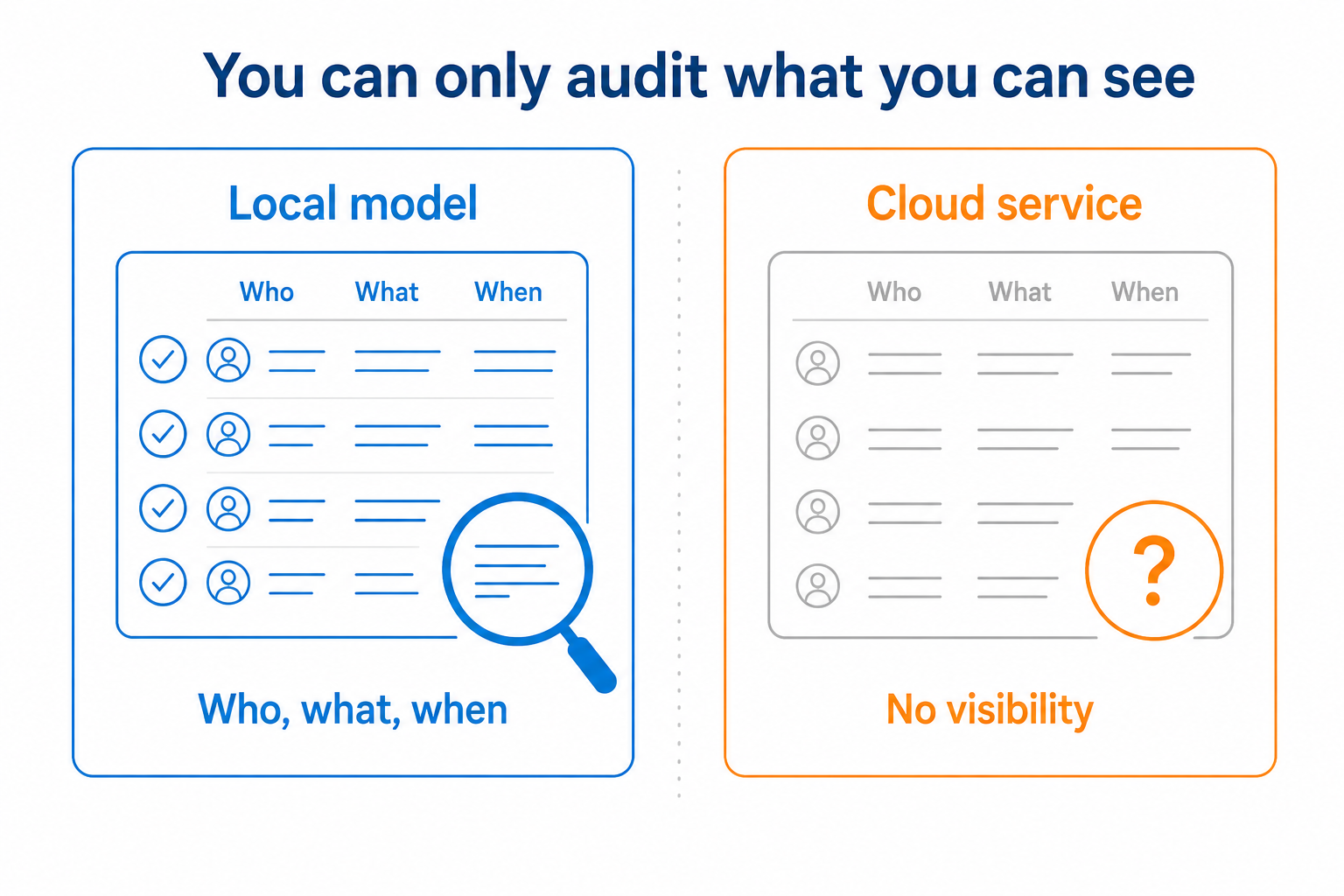
With a model on your own hardware, you own the logs. You can see what was asked, what came back, which user it came from, and when. If a result is later queried, or a process produces the wrong output, you can reconstruct exactly what happened.
With an external service you lose most of that visibility into per-user activity. For regulated work, where you may have to show who did what, a complete audit trail is not a nice-to-have. Owning the model means owning the record.
The runaway-cost risk
Cloud AI is billed by the token. One enthusiastic user, or a single misconfigured automation, can run up a large bill in a day. Keeping that in check means usage caps, monitoring and a layer of oversight you did not have before.
Owned hardware has a fixed cost. Once it is paid for, the meter does not run, and a novice cannot accidentally spend thousands overnight. For a small firm, predictable is worth a great deal.
What it looks like in practice
Most firms do not need to go all or nothing. The sensitive work, document review, drafting, extracting data from your own files, runs on a model in your office. Anything that is not confidential can still use a frontier API when you want the extra capability.
The hardware that makes this practical, from a compact machine like the NVIDIA DGX Spark or AMD Strix Halo to a GPU workstation, does not land easily in South Africa. Scott’s Shipping Services imports it, clears it, and delivers it as one all-inclusive quote. For the full breakdown of what to buy, see our guide to importing AI and local-LLM hardware into South Africa, and the wider case for owning your AI hardware. If you want us to source specific parts, that is our international shopping concierge.
Frequently asked questions
Is a local LLM POPIA compliant?
Compliance depends on your whole setup, not one tool. What a local model does is remove the cross-border processing question that makes cloud AI hard to square with POPIA, because the data stays on your premises. Confirm the specifics for your practice with a compliance specialist.
Can I not just use the privacy settings on ChatGPT or similar?
Professional and API plans still process your data with a provider outside South Africa, and the strongest data-residency controls are generally enterprise-only. A local model keeps the data in-house, which is a simpler position to defend.
What hardware does a small firm need?
It depends on the size of model you want to run, and the deciding spec is memory. Our guide to importing AI and local-LLM hardware into South Africa breaks down the options, from a single workstation to a turnkey box.
Does SSS give legal or compliance advice?
No. We import the hardware, cleared and delivered. The legal and compliance side is for a specialist in that field. Tell us what you want to run and we will help you land the right kit.
Useful resources
SSS: Why run a local LLM? The case for owning your AI hardware
SSS: Importing AI and local-LLM hardware into South Africa
SSS: International shopping concierge
Weighing a private AI setup for your firm? Use our online calculator for a quick estimate, or get in touch to source the hardware.