
Why Run a Local LLM? The Case for Owning Your AI Hardware

Running a local LLM means hosting an AI model on hardware you own instead of renting access through a cloud API. For South African professionals, builders and businesses, owning the hardware is what turns AI from a monthly bill into an asset you control. This is the case for going local: what you gain, who it suits, and the kind of work it already does.
We do not sell the model. What we do is import the hardware it runs on, cleared and delivered to your door, so the estimate below is for landing that kit in South Africa.
What you actually gain
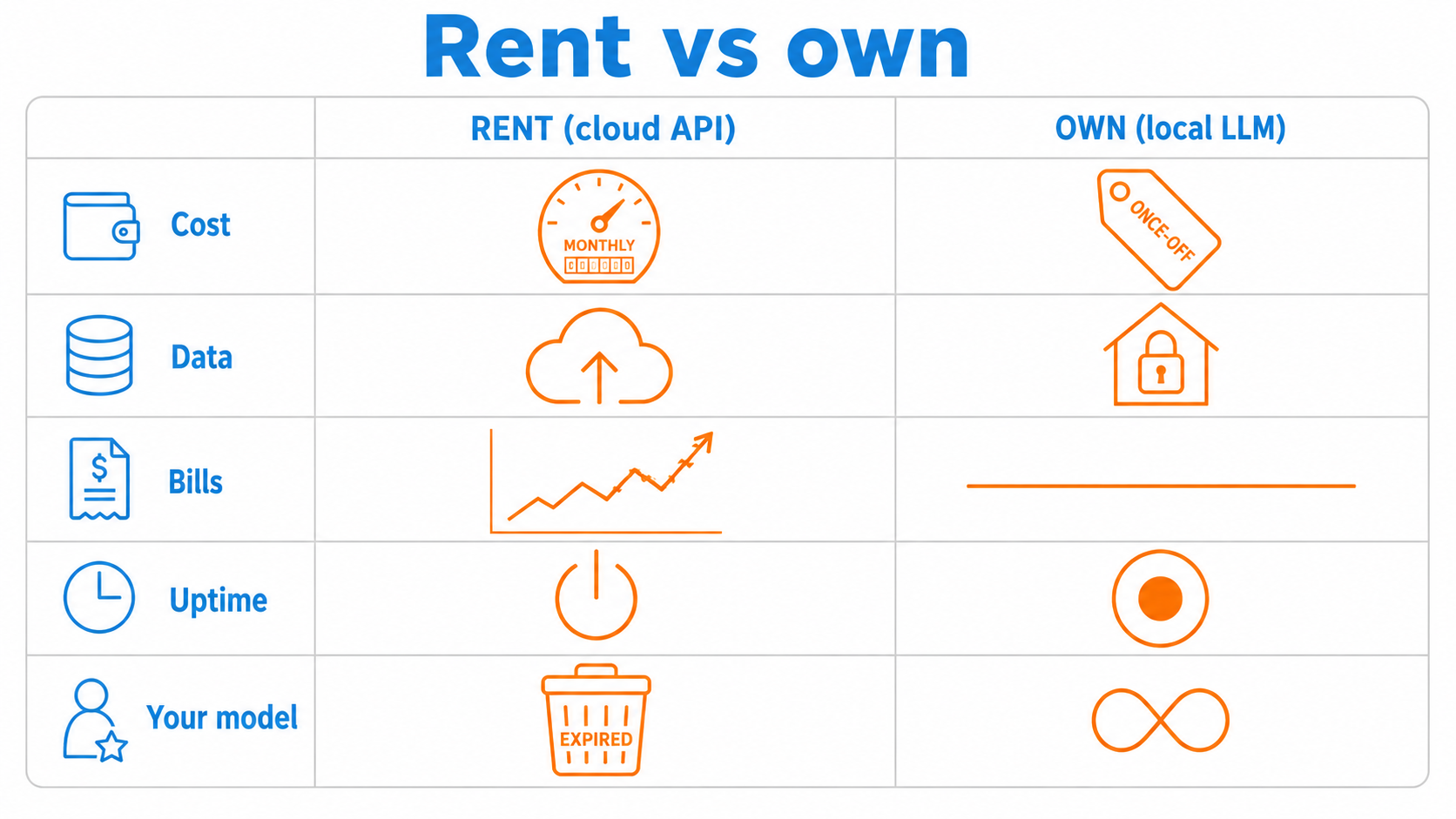
It keeps working. A model on your own hardware does not care about sanctions, export bans, account suspensions or a provider pulling out of the South African market. Nobody can switch it off.
Your data stays put. Nothing is uploaded to a third party. For anyone handling client records, case files, patient data or financials, that is the difference between compliant and not under POPIA.
You pay for it once. No subscription, no per-token meter running in the background, no price hike landing on a Tuesday. The cost is the hardware you already own.
No runaway bills. A misconfigured script cannot quietly burn thousands in API tokens overnight. There is no meter to run away with.
You keep what works. A model that suits your workflow will not be deprecated or retired out from under you. Pin the version that works and run it for years.
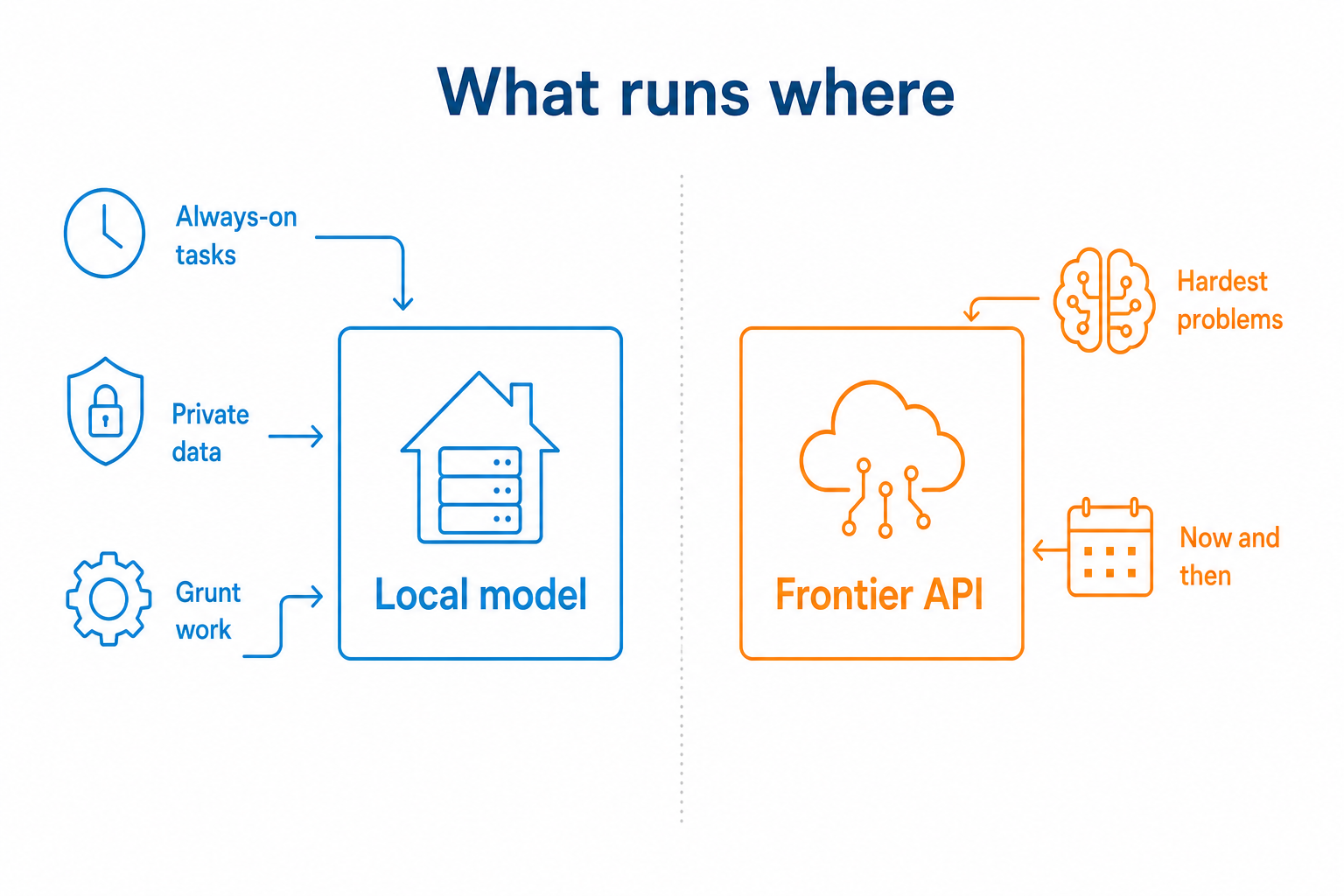
Right tool, right cost. Run the repetitive, always-on grunt work on your own model, and save the frontier APIs for the genuinely hard problems. Most jobs do not need a flagship model.
Who it is for, and what it does
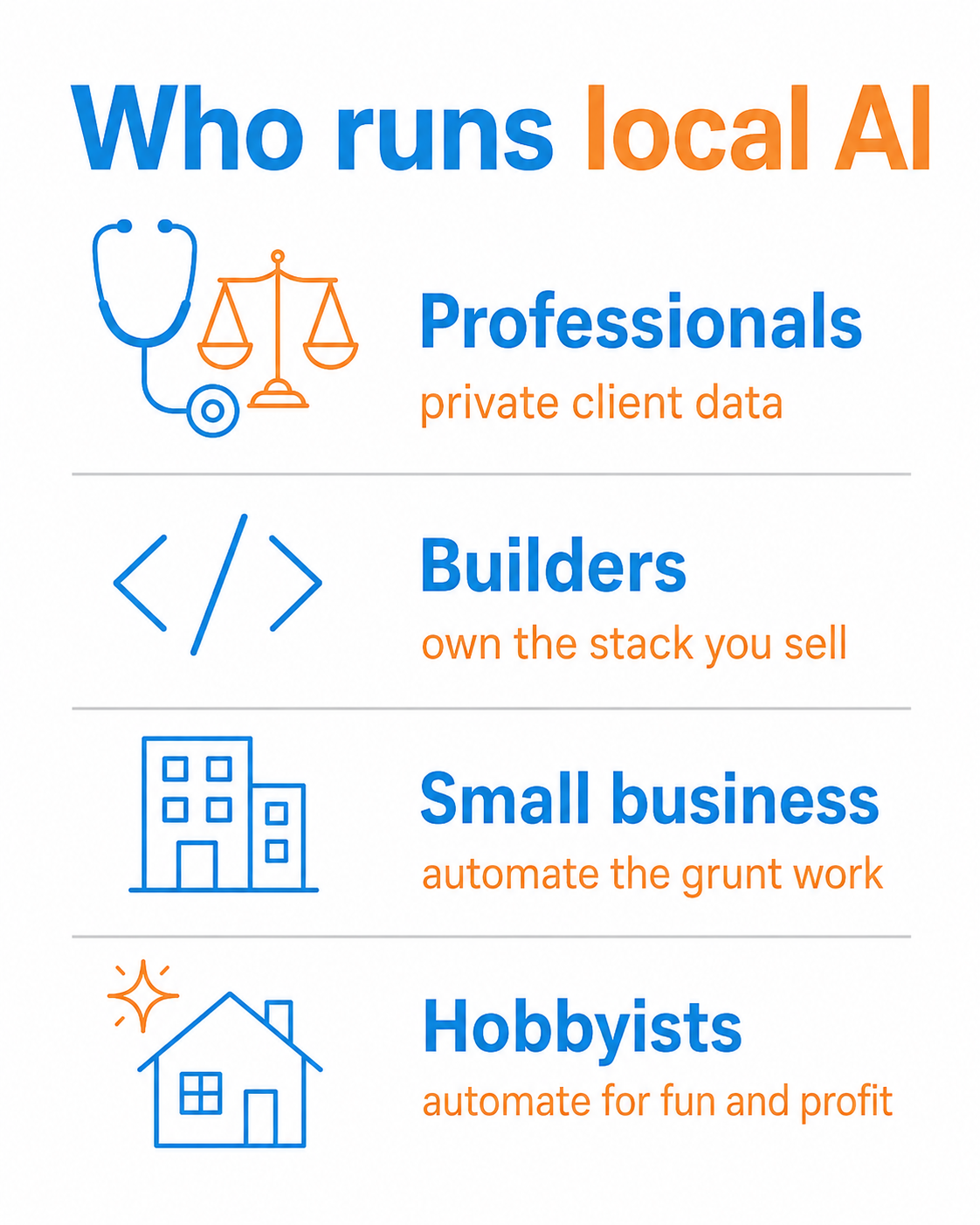
Professionals who need it now
Doctors, lawyers, accountants and developers working with confidential or regulated data cannot push it to a cloud API and hope for the best. Local is the compliant route, and usually the urgent one. The data control, POPIA and audit side of this runs deep, so we covered it on its own: local LLMs for professional firms in South Africa.
Builders and IT consultants
Developers who build AI tools and sell them to several companies need to own the stack they ship. We have built our own at SSS: a custom CRM shaped around how the business runs, and a WhatsApp bot for customer queries, the channel most South Africans actually use. On hardware you control, you build and test without a token meter running, and you are not handing your clients’ workflows to a third party you cannot vouch for.
Small businesses with a clued-up IT person
If you have someone who can put a capable machine in the corner, you can automate the work that quietly eats hours: customs-code classification, email triage, scheduled reporting, social posting. A local model runs the always-on, repetitive end of it while the frontier APIs handle the rest. We walk through the real examples in using a local LLM to automate your small business.
Hobbyists and tinkerers
Plenty of this starts as a hobby and turns into something real: home automation, local camera detection, a themed dashboard on the TV. Running the AI side on your own hardware means no subscription for something you built for yourself, and full freedom to tinker. Ours leans Lord of the Rings, and we show how it fits together in building a local AI home setup.
Where SSS comes in
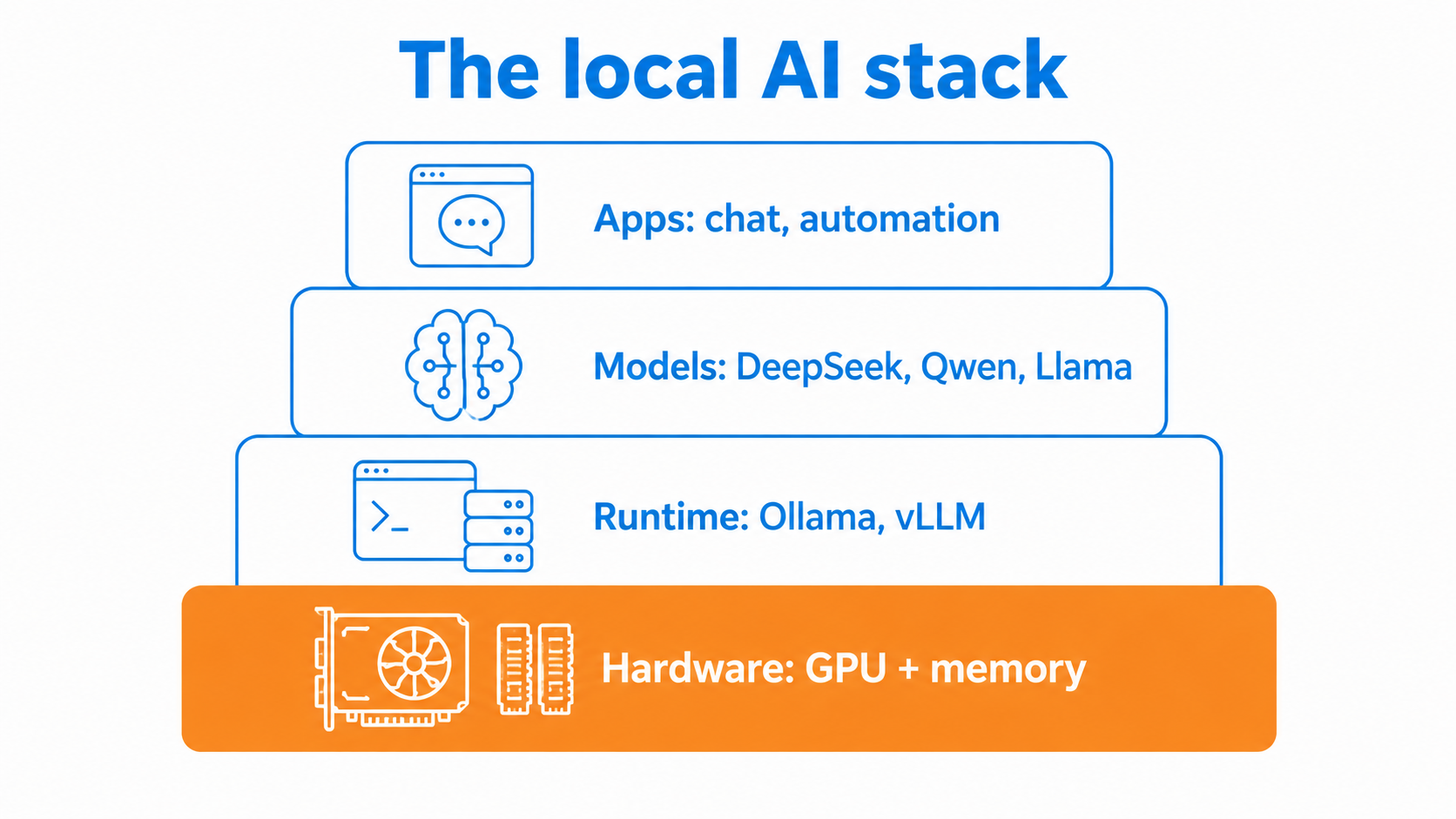
Every one of these benefits depends on one thing: owning the hardware. That is the part that does not land easily in South Africa.
Scott’s Shipping Services sources the GPUs, mini-supercomputers and high-VRAM cards local models run on, handles the customs classification, duties and VAT, and delivers it landed as one all-inclusive quote. For the full breakdown of what to buy, see our guide to importing AI and local-LLM hardware into South Africa. If you want us to buy specific parts on your behalf, that is our international shopping concierge.
Frequently asked questions
Do I need a local LLM, or is the cloud fine?
For plenty of work, a cloud API is fine. Local wins when privacy matters, when you want predictable costs instead of a per-token meter, or when the job needs to run all day every day. Many setups do both: local for the routine work, cloud for the hardest problems.
Is a local model as good as ChatGPT or Claude?
The frontier cloud models still lead on the hardest tasks. For everyday work, coding help, summarising, drafting and the repetitive grunt work, open models you can run locally are now strong enough that most users would not notice the difference.
What hardware do I need to run one?
It depends on the size of model you want to run, and the deciding spec is memory. Our guide to importing AI and local-LLM hardware into South Africa breaks down the tiers, from a single card to a turnkey box.
Can SSS set the whole thing up for me?
We are the import side: we get the right hardware into South Africa, cleared and delivered. We are not a managed AI service, but tell us what you want to run and we will help you land the parts that fit.
Useful resources
SSS: Importing AI and local-LLM hardware into South Africa
SSS: International shopping concierge
SSS: How to import goods to South Africa
Planning a local AI build? Use our online calculator for a quick estimate, or get in touch to source the hardware.