Freight from the UK and Europe to South Africa: VAT, Permits and What to Check

Britain and Europe are where South African buyers go for machinery, workshop equipment, specialist vehicles and industrial plant, and the freight route is well trodden. Two things decide whether the numbers work: whether the sale is structured as a proper export, and whether the goods are used. Get those right and a European purchase is frequently better value than the same thing bought locally. Scott’s Shipping Services buys from the supplier, ships, clears and delivers, quoted as one rand figure with duty and VAT included.
In This Guide
The VAT question, and why freight differs from courier
This is the part that catches people out, in both directions, so it is worth being precise about.
UK VAT is 20%. Across the EU it runs from roughly 17% to 27% depending on the member state. Whether you pay it comes down to one thing: whether the sale is structured as an export.
On a courier or consolidation purchase, the tax stays on. When goods are delivered to an address inside the source country and consolidated there, the seller is making a domestic sale. It is taxed as one. This is how our courier import service works for smaller items, and it is why our guide to importing from the UK to South Africa tells consumers to budget for the 20% rather than expecting to escape it.
On a true freight shipment, it comes off. Where the supplier ships direct to port or airport and the goods leave the country as a documented export, the sale is zero rated for the seller’s domestic tax. That is the ordinary treatment of an export sale, and on a freight-sized order it is a material difference to the landed cost.
Which means the same item can land at meaningfully different costs depending on how the purchase is structured, and it is worth asking us which route suits your order before you commit to either.
Buying in Europe does not lower your duty
This comes up on almost every European enquiry, usually because someone has read that South Africa has arrangements with the EU and the UK. It is worth settling before you build it into a budget, because it will not survive contact with a customs entry.
South African import duty is decided by two things: the tariff heading your goods classify under, and the customs value SARS establishes. Where you happened to buy the item changes neither. There is no European discount waiting to be claimed, and across the shipments we have handled, European cargo clears at the general rates.
Cost your import on the general rate for your tariff heading. If a supplier or a forwarder has told you otherwise, ask them to put the rate and the reasoning in writing before you commit any money, because the entry is filed in your name and the shortfall is billed to you if it turns out to be wrong.
Used equipment needs a permit before it arrives
This is the single most common way a European machinery purchase goes wrong, and it has nothing to do with freight.
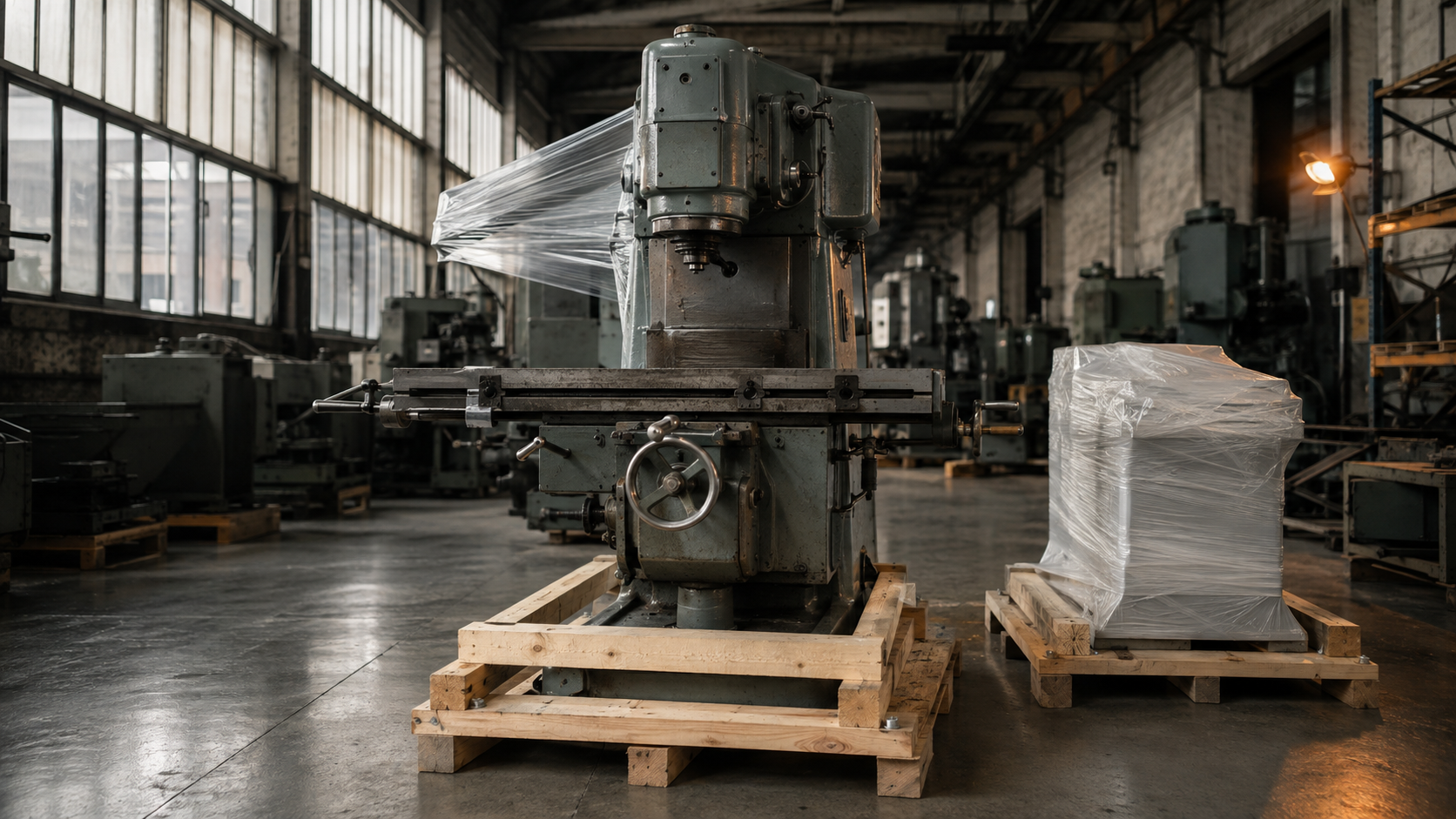
All used and second-hand goods, along with waste and scrap, are subject to South African import control. Importing them requires a permit from the International Trade Administration Commission, and the permit has to be in place before the goods arrive. Most new goods are exempt from import control; used goods, as a class, are not.
Second-hand machinery is exactly what a lot of people go to Europe for. The used plant and workshop market there is deep, the equipment is often well maintained, and the pricing against new is compelling. None of that helps if the cargo lands without a permit.
The same applies to anything else under import control. Our guide to prohibited and restricted imports sets out what needs an authority in place ahead of arrival.
The voltage advantage over American equipment
The UK and the EU run on 230V at 50Hz. So does South Africa. That is not a small detail when you are buying anything with a motor, a heating element or a power supply in it.
European machinery arrives ready to plug in, subject to the usual plug and wiring work. The equivalent American machine runs on 120V at 60Hz, which means a transformer at minimum, and for anything motor driven a genuine performance problem, because a motor designed for 60Hz turns roughly 17% slower on a 50Hz supply and can run hot doing it.
For workshop equipment, catering equipment, compressors, pumps and anything else built around an electric motor, this alone is often enough to make Europe the better source even where the headline price is higher. It is worth weighing before you compare quotes across corridors.
Three phase supply is worth checking separately. Industrial European equipment is frequently specified for 400V three phase, which is standard here, but the configuration is worth confirming with the supplier rather than assuming.
Ports, routing and timing
Cargo out of Britain and northern Europe typically leaves from the major container ports of the North Sea and Channel range and arrives at Durban or Cape Town. Mediterranean origins route differently. Some services run direct, many transship at a hub along the way.
Transhipment is the detail to ask about, because a change of vessel adds time and adds a point at which cargo can be rolled if space is tight. A transit time quoted without saying whether it is direct is not a figure you can plan against. We confirm timings against your specific routing at the time of booking.
Air freight is the alternative where the goods justify it, and for high value machinery parts or anything holding up a production line it frequently does. The comparison is set out in our guide to air freight vs sea freight to South Africa.
Incoterms, landed cost and container choice
The mechanics that apply to any freight shipment apply here too, and they are set out in full rather than summarised twice.
Which Incoterm you buy on decides how much of the journey the supplier’s price covers, and it is why three quotes for the same shipment look nothing alike. What a complete landed cost has to include, how customs duty and VAT on the added tax value are calculated, and whether to ship LCL or FCL are all covered in our guide to freight importing to South Africa.
For how SARS arrives at the number it charges duty and VAT on, see how customs value is determined in South Africa.
If you are importing for a business rather than personal use, our guide to importing goods for your business covers the commercial side.
Frequently Asked Questions
Can I avoid paying UK or EU VAT on a freight shipment?
Where the supplier ships direct to port or airport and the goods leave as a documented export, the sale is zero rated for the seller’s domestic VAT, so it does not form part of your cost. That is different from a courier or consolidation purchase delivered to an address inside the source country, which is a domestic sale and keeps the tax on. It depends on the supplier being willing and able to handle an export sale, so confirm it at the quotation stage.
Will I get a lower rate of duty because I am buying from Europe?
No. Duty is decided by the tariff heading your goods classify under and the customs value SARS establishes, not by where you bought them, and rates run from 0% to 45% depending on what the item is. Across the shipments we have handled, European cargo clears at the general rates. Budget on the general rate for your heading rather than on a discount that does not materialise.
Do I need a permit to import used machinery from Europe?
Yes. All used and second-hand goods are subject to South African import control and require a permit from ITAC, which must be in place before the goods arrive rather than obtained afterwards. Because second-hand plant and workshop equipment is one of the main reasons people buy from Europe, this is worth raising before you commit to a purchase.
Is European equipment compatible with South African power?
Generally yes. The UK, the EU and South Africa all run 230V at 50Hz, so European equipment does not need the transformer that American equipment does, and motor driven machinery runs at its design speed rather than roughly 17% slow. Three phase equipment is usually specified for 400V, which is standard here, but the configuration is worth confirming with the supplier.
Do I need an importer’s code to import from Europe?
Not with Scott’s Shipping Services. We clear under our own customs licence and issue you a standard South African tax invoice, so you do not need to register with SARS or hold an importer’s code of your own.
Can you buy the equipment for me, or only ship it?
Both. We can place the order with your supplier, pay them, and manage the shipment through to delivery at your premises, so you deal with one company and one rand invoice rather than coordinating a supplier, a forwarder and a clearing agent yourself. That is the main difference between us and a conventional freight forwarder. What we do not do is clear goods you have already bought or take over a shipment someone else arranged.
If you’re planning your next import, don’t leave it to chance. Scott’s Shipping Services is here to make the process smooth, cost-effective, and fully compliant. Get your freight quote today using our freight quote form, or contact us for expert advice on your shipment.