How to Import Goods to South Africa: A Step-by-Step Guide

Importing goods to South Africa comes down to five steps: plan your purchase, prepare your documents, choose a shipping method, clear customs, and arrange delivery. Get any of those wrong and you face surprise costs, delays, or goods stuck at the border.
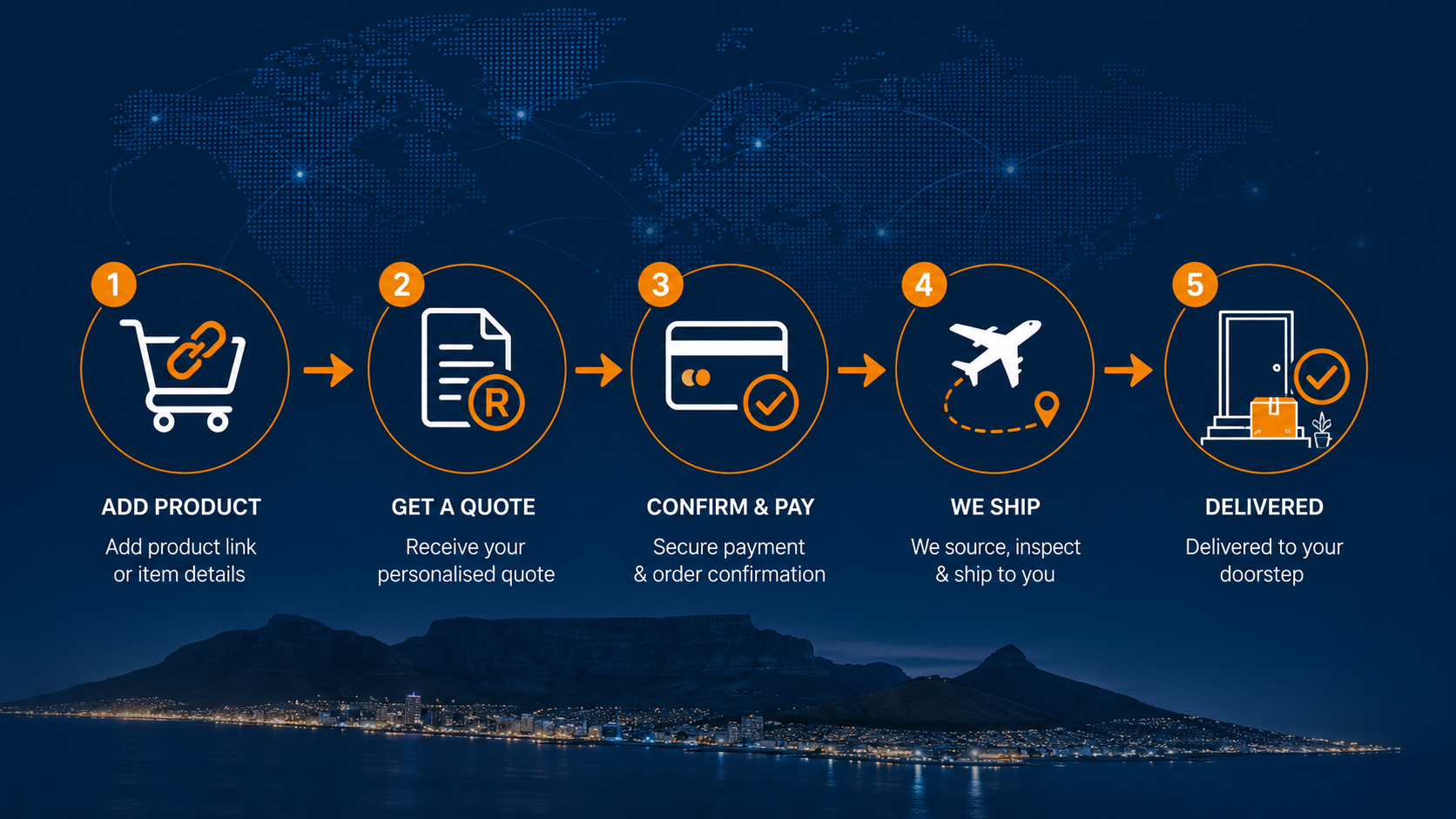
This guide covers each step in practical terms, with tips for avoiding the mistakes that trip up most first-time importers. Where relevant, we explain how Scott’s Shipping Services (SSS) handles each stage, so you can decide whether to go it alone or hand the process to a specialist.
In This Guide
Step 1: Pre-shipment planning
Before you order anything from overseas, confirm your goods can legally enter the country. Some items are outright prohibited (firearms, certain chemicals, hazardous materials), and others need special permits (some foodstuffs, medicines, specific electronics). Ship a restricted item without the right paperwork and SARS can seize or destroy it, plus issue fines. Check South Africa’s official import restrictions in advance. Not sure what’s worth bringing in? Our guide to popular import categories covers what South Africans commonly import and why.
Consider your importer status. The South African Revenue Service (SARS) allows individuals to bring in a limited number of shipments (up to R150,000 total value) before requiring formal registration as an importer. If you plan to import regularly or for a business, you’d normally need a SARS importer’s code. SSS acts as Importer of Record, which means you can import through them as often as needed without obtaining your own registration.
Budget for the real cost, not just the sticker price. On top of the purchase price and international shipping, you’ll pay customs duty (0% to 45%+ depending on the product) and 15% VAT calculated on 110% of the item’s value including duty. As a rough guide, add 20 to 30% to the product price for the full landed cost. For an exact figure, use SSS’s Quick Estimate calculator before you commit to buying. Our importing costs breakdown explains how these charges add up in detail.
Finally, buy from reputable retailers. Confirm the seller ships to South Africa (or to an international forwarding address) and that items are packaged properly for international transit. If you’re unsure how to purchase from an overseas store, SSS can buy on your behalf when you provide a product link.
Step 2: Preparing your documents
Accurate paperwork is the single biggest factor in whether your shipment clears customs quickly or sits in a queue. Missing or incorrect documents are the most common cause of delays, fines, and inspections.
Commercial invoice
Provided by the seller. Lists buyer and seller details, describes the goods, states quantities and the true transaction value. SARS uses this to calculate duties, so it must be accurate. Do not ask sellers to mark items as “gift” or understate the value. SARS treats this as fraud.
Packing list
An itemised breakdown of what’s in the shipment: descriptions, weights, and dimensions for each item. Must match the commercial invoice exactly.
Transport document
Proof of shipment and your tracking reference. For air shipments (courier or cargo), this is the Air Waybill. For sea freight, it’s the Bill of Lading.
Certificates and permits
Any special documentation your items require: import permits for restricted goods, certificates of origin for preferential duty rates under trade agreements, NRCS letters of authority for regulated products. Get these sorted before you ship. Trying to obtain them after the goods arrive at customs causes significant delays.
Every detail must be consistent across all documents. A value on the invoice that doesn’t match the packing list will raise flags and can trigger a full inspection. If you’re clearing the shipment yourself, you’ll also need to complete the SARS SAD 500 customs declaration form. Errors on this form mean delays.
SSS prepares or verifies all documentation, files customs declarations, and settles duties and VAT as part of their service. You receive a single tax invoice in South African rands covering everything.
Step 3: Choosing a shipping method
How you ship affects transit time, cost, and how your package is handled on arrival. Here are your options:
Express courier (door to door)
International couriers like DHL, FedEx, and UPS offer the fastest delivery for small to medium parcels, typically 3 to 10 business days. The courier handles customs clearance as part of the service and bills you for duties and VAT (plus a small admin fee) on delivery. Per-kilogram costs are higher than freight, but for most online shopping orders, courier gives the best balance of speed and simplicity. SSS uses this method for all standard imports via its courier import service.
Air freight
Best for shipments too large or heavy for courier, or for items couriers won’t carry. Transit time is fast (3 to 7 days), but you’ll need a freight forwarder or clearing agent in South Africa to handle customs at the airport. Expect handling and possible storage fees on arrival. Businesses use this for urgent bulk shipments or specialised goods. SSS offers air and sea freight services for larger shipments.
Sea freight
The cheapest option per kilogram for very large or bulk cargo. Transit takes 6 to 8 weeks or more, and you’ll need a shipping agent for port customs clearance plus local transport from the harbour. Makes sense for wholesale imports or heavy equipment. Not practical for typical consumer purchases.
Postal service
Some sellers offer international post or EMS. For South Africa, this is extremely slow (weeks to months), tracking is poor, and lost packages are common. If duties apply, you’ll be told to pay at a post office or customs depot before collecting. Avoid this method for anything valuable or time-sensitive. SSS never uses postal mail for this reason.
For most people importing to South Africa, express courier is the right choice. SSS consolidates individual orders from abroad into bulk shipments sent by expedited air courier. Your order goes to an SSS warehouse overseas, gets combined with other parcels, and flies to South Africa at better rates than you’d get shipping alone. You don’t manage any logistics yourself.
Step 4: Customs clearance
When your shipment arrives in South Africa, a customs declaration (Bill of Entry) must be filed with SARS. The critical part is classifying your goods under the correct HS tariff code, which determines the duty rate. There are thousands of codes, and getting it wrong means paying the wrong duty or facing penalties for misdeclaration. Consult the SARS tariff database or ask a specialist if you’re unsure.
South Africa charges customs duty on most imported goods. Rates range from 0% for some items (certain electronics, raw materials) to 45% or more for others (clothing, footwear, some food products). On top of duty, 15% VAT applies to 110% of the customs value plus any duty. That means total import taxes on a high-duty item can exceed 50% of the product price.
All taxes must be paid before goods are released. With courier shipments, the courier typically advances these charges and invoices you before delivery. For freight shipments you handle yourself, you pay SARS directly.
Customs delays usually come from three places: incorrect or missing paperwork, SARS querying your declared values, or a missing permit. SARS also randomly selects shipments for physical inspection, which can add a few days and a small inspection fee. The best defence is strict compliance: correct documents, honest values, and all permits sorted before shipping.
SSS manages the entire clearance process. They classify goods under the correct tariff codes, prepare all declarations, and pre-pay duties and VAT as part of your upfront quote. SSS typically begins customs paperwork while goods are still in transit, so most shipments clear within hours of landing.
Step 5: Delivery to your door
Once customs clearance is done, the last step is getting the goods to your address. How this works depends on your shipping method:
Courier shipments
If duties weren’t prepaid, the courier collects payment before handing over the package. If everything was settled upfront (as with SSS), the courier delivers with no payment needed on arrival. Expect delivery within 1 to 2 business days of clearance in major cities, with an extra day or two for remote areas.
Freight shipments
You’ll need to arrange local transport from the airport or port warehouse to your address. Keep an eye on handling and storage fees at the cargo depot, as these start accruing if collection is delayed.
Postal shipments
You’ll receive a notice directing you to a post office or customs depot. Pay outstanding duties there and collect in person. Storage fees begin if you take too long.
Watch for last-mile charges. Couriers may add out-of-area surcharges for remote addresses, and customs inspections can incur small additional fees. If your shipping arrangement doesn’t explicitly include delivery to your door, budget for local transport on top.
SSS includes door-to-door delivery in the quoted price, with no additional charges on arrival. Once cleared, your parcel is handed to a local courier and delivered to your address. You receive tracking updates throughout. Most imports through SSS reach customers in 10 to 21 days from order to delivery, including customs clearance.
Tips to avoid delays and extra costs
- Check restrictions before buying. Confirm your product is allowed into South Africa and whether it needs permits. Importing prohibited items without paperwork leads to seizures and fines. Check the SARS guidelines or consult SSS before ordering.
- Calculate your full landed cost upfront. Factor in duties, VAT, and handling fees. Most goods attract at least 15% VAT, and duties can add 5% to 30% or more. Use the SSS Quick Estimate tool or ask your logistics provider for a quote before ordering.
- Pick the right shipping method. Express courier works best for most online purchases. Reserve air freight for oversized or restricted items, and sea freight for bulk orders where speed doesn’t matter. Avoid untracked postal services for valuable goods.
- Get your paperwork right the first time. Wrong values, incorrect tariff codes, or missing documents are the leading causes of customs delays and penalties. Double-check everything or use a professional clearing service. See our list of common importing mistakes for more on what to avoid.
- Know what delivery charges to expect. Beyond shipping and duties, there can be courier admin fees, remote-area surcharges, or warehouse storage charges. An all-inclusive door-to-door service eliminates these surprises.
Frequently asked questions
Do I need a SARS importer’s code to import goods to South Africa?
If you import only occasionally and stay under SARS’s personal threshold (currently R150,000 total), you can usually import without registering. Once you import regularly or for business, SARS requires an importer’s code. Using SSS as your Importer of Record lets you import as often as needed without your own registration.
How much import duty and VAT will I pay?
Duty depends on the product’s HS tariff code and ranges from 0% to 45% or more. VAT of 15% is then charged on 110% of the customs value (product price + shipping + duty). A practical rule of thumb: add 20 to 30% to the purchase price. For an exact figure, use the SSS Quick Estimate calculator.
What items are restricted or prohibited when importing to South Africa?
Firearms, certain foodstuffs, medicines, chemicals, batteries, and hazardous materials are commonly restricted or prohibited. Shipping these without correct permits results in seizures, fines, or destruction of the goods. Check the SARS guidelines or contact SSS before ordering anything you’re unsure about.
Which shipping method is best: courier, air freight, sea freight, or post?
Express courier suits most online shopping and small-to-medium parcels. Air freight works for larger shipments that are still time-sensitive. Sea freight is cheapest for bulk cargo where you can wait 6 to 8 weeks. Postal services to South Africa are slow and unreliable for valuable items. SSS consolidates parcels into bulk air courier shipments for faster delivery at better rates.
Why do some importers get surprise charges on delivery?
Usually because duties, VAT, clearance fees, or remote-area surcharges weren’t included in the original shipping cost. Many overseas sellers quote only international shipping and ignore South African import taxes. SSS avoids this by quoting a single all-inclusive landed cost in rands before you buy.
How long does importing to South Africa take?
It depends on the method and origin country. Courier shipments typically take 3 to 10 days in transit plus customs processing time. Sea freight can take 6 to 8 weeks or more. Through SSS, most imports arrive within 10 to 21 days from order to doorstep, including customs clearance.
Can SSS buy from overseas shops on my behalf?
Yes. If a retailer doesn’t ship to South Africa, or you’re unsure how to place an international order, SSS can purchase on your behalf. You provide the product link, and SSS handles the buying, shipping, customs, and delivery on an all-inclusive quote.
What happens if customs holds or inspects my shipment?
SARS may randomly select shipments for inspection or query declared values and documentation. This can add a few days and may incur small inspection or storage fees. When you ship through SSS, their team handles all communication with customs, provides any additional information SARS requests, and works to clear the shipment as quickly as possible while keeping you updated.
Ready to import from a specific store? See our step-by-step guides for Amazon, eBay, Etsy, and AliExpress. Importing for a business? Our business importing guide covers what’s different. For a broader look at shopping internationally, see our international online shopping guide.
If you’re planning your next import, don’t leave it to chance.
Scott’s Shipping Services is here to make the process smooth, cost-effective, and fully compliant. Get your quick estimate today
using our online calculator,
or contact us for expert advice on your shipment.